Guide to financing a funeral in the UK.

Funeral costs hit everyone differently, and whilst for some it is a considered cost or has already been paid for in advance, for others especially in the case of a sudden death, the cost can come as a shock. This article takes you through the average costs, what those costs are made up of so that you understand where the costs are coming from, and then what your options are for paying for a funeral.

Contents:

  • What is the average cost of a UK funeral?

  • Where are these costs coming from?

  • What are my options for paying for a funeral?

  1. How much does a funeral cost in the UK? (2025–2026)

Funeral costs in the UK have risen year-on-year with the increasing costs pushing many families to have smaller more intimate services whilst still maintaining a sense of meaning.

All numbers are taken from the Sunlife 2026 ‘Cost of Dying’ report and are an average across the whole UK. In some cases depending on area and the type of service you decide to go for, funerals have been reported to cost up to £9,800.

Service Type Burials Cremations
Simple attended funeral £4,758 £3,518
Traditional attended funeral £5,440
+4.7% increase on 2024
£4,200
+5.5% increase on 2024
Direct funeral (unattended) £1,628* + avg. cost of a plot £2,374
Total £4,002
+6.6% increase on 2024
£1,628
+1.9% increase on 2024

* Direct burial costs do not include third-party fees.

What’s included in these costs?

This is purely the costs associated with the funeral service and internment of the body. We’ve broken down the costs for the wake, further down in this article.

2. How much does a wake cost in the UK?

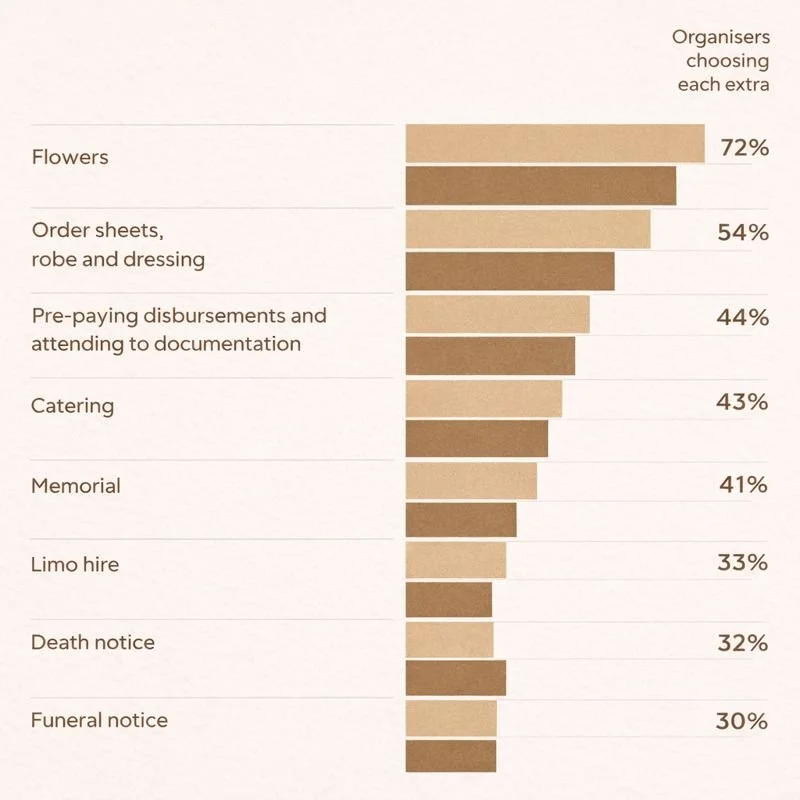
A wake is considered an optional cost and like any major life event such as a wedding, it can quickly get expensive with all the additional extras. If you are worried about what to include we have used the research from Sunlife on what optional extras most people go for and you can see that most common are things like flowers, and the order of service which is often printed so that people can take it home as a keep-sake.

The average cost of a wake or ‘send-off’ in the UK, in 2026, is £1,312. The majority of the cost comes from the memorial which is usually around £1,044, followed by the costs of catering (£564), venue hire (£362) and flowers (£242).

Funeral directors in the UK are legally required to publish a standardised price list and an additional options list, which helps families compare quotes.

3. How to Pay for a Funeral in the UK?

Let’s start with an important clarification which is who is obliged to pay for someone’s funeral in the UK.


There is a lot of pressure that comes with organising a funeral. Many cite the biggest pressure lever to be wanting to do right by their loved one who died. This is normal but must be balanced with affordability.

Who pays for the funeral in the UK?

Usually, it is the family of the deceased who pay for the funeral. In some cases the person may have already paid for their own funeral through a funeral planning scheme, alternatively there may be enough left in the estate to cover the costs. If this is not the case, then it is the role of family or friends to cover the costs.

If there are no family or friends in a position to pay for the funeral then there is a Public Health Funeral. This is usually a cremation, with the time and date chosen by the council, with a very basic service with no extras like flowers or cars. You can read more about public health funerals here.

3.1 Using the deceased’s estate to pay for the funeral

If you believe the deceased is likely to have enough money to pay for their funeral then it is common practice to apply to the bank to have the funds released to cover the costs. This is usually done before probate and is a relatively standard procedure. For this you will need the death certificate and the person who is now the deceased person’s legal representative to inform the bank of their death and to pass along the invoices to be paid directly from the deceased’s accounts.

3.2. Funeral Expenses Payment (Government Help)

This is a benefit for people on certain means-tested benefits (e.g., Universal Credit).
It helps pay for burial or cremation fees plus up to £1,000 towards other costs, threshold-dependent. You can find out more here.

3.3. Funeral Plans

Nowadays it is becoming more common to buy a funeral plan in advance and pay it off in instalments. For many older people who are aware that their time may be coming to an end and don’t want the financial burden of a funeral to rest on their loved ones, a funeral plan offer comfort and sense of security. Always check to see if your loved-one had a plan in place and then be careful to check the terms and conditions.

3.4. Life Insurance / Over-50s Cover

Many life insurance policies can be used to pay funeral costs. Some have a funeral benefit add-on that ensures funds are earmarked specifically for funeral costs, making it easier for loved ones to cover the costs.

3.5. Payment Plans with Funeral Directors

Some funeral directors offer instalment plans (e.g., 12–24 months), sometimes with a deposit required. Interest rates and terms vary widely — read the contract!

3.6. Loans, Savings & Crowd-Funding

  • Personal loans or credit cards are another option, though expensive long-term.

  • Many families turn to crowdfunding to help cover costs in hard financial times.

  • Using savings is common but can affect wider financial stability for survivors.


We hope you found this guide useful. If you have more questions please do check out our other articles covering topics around funerals and death. We know this can be an incredibly difficult time and our aim is to provide you with timely information and guidance so that you can navigate through this process without it adding to your trauma.

Previous
Previous

How to put together a funeral Order of Service.

Next
Next

The definitive guide to buying an urn for ashes.

Stay in touch.

If you are a business we can work with then please do use our contact form to get in touch!

Questions?

Contact us

Service attributes Simple attended Traditional attended Direct
Collection of the deceased X X X
Care of the deceased, robe and dressing X X X
Pre-paying disbursements and handling documentation X X X
Provision of a hearse X X
Wood-effect coffin X
Mid-range oak-veneer coffin X
Fees for burial or cremation at the cemetery or crematorium X X X
Use of chapel of rest for viewing X X X